
 中文
 英文
TC4 vs. TA15 Titanium Alloys: Properties, Applications
Titanium alloys are essential materials in aerospace and advanced manufacturing. Among them, TC4 (Ti-6Al-4V) and TA15 (Ti-6.5Al-2Zr-1Mo-1V) are widely recognized for their distinct performance characteristics. TC4 offers a balanced combination of strength, toughness, and versatility, while TA15 is valued for its elevated-temperature performance and suitability for selected aerospace structures.
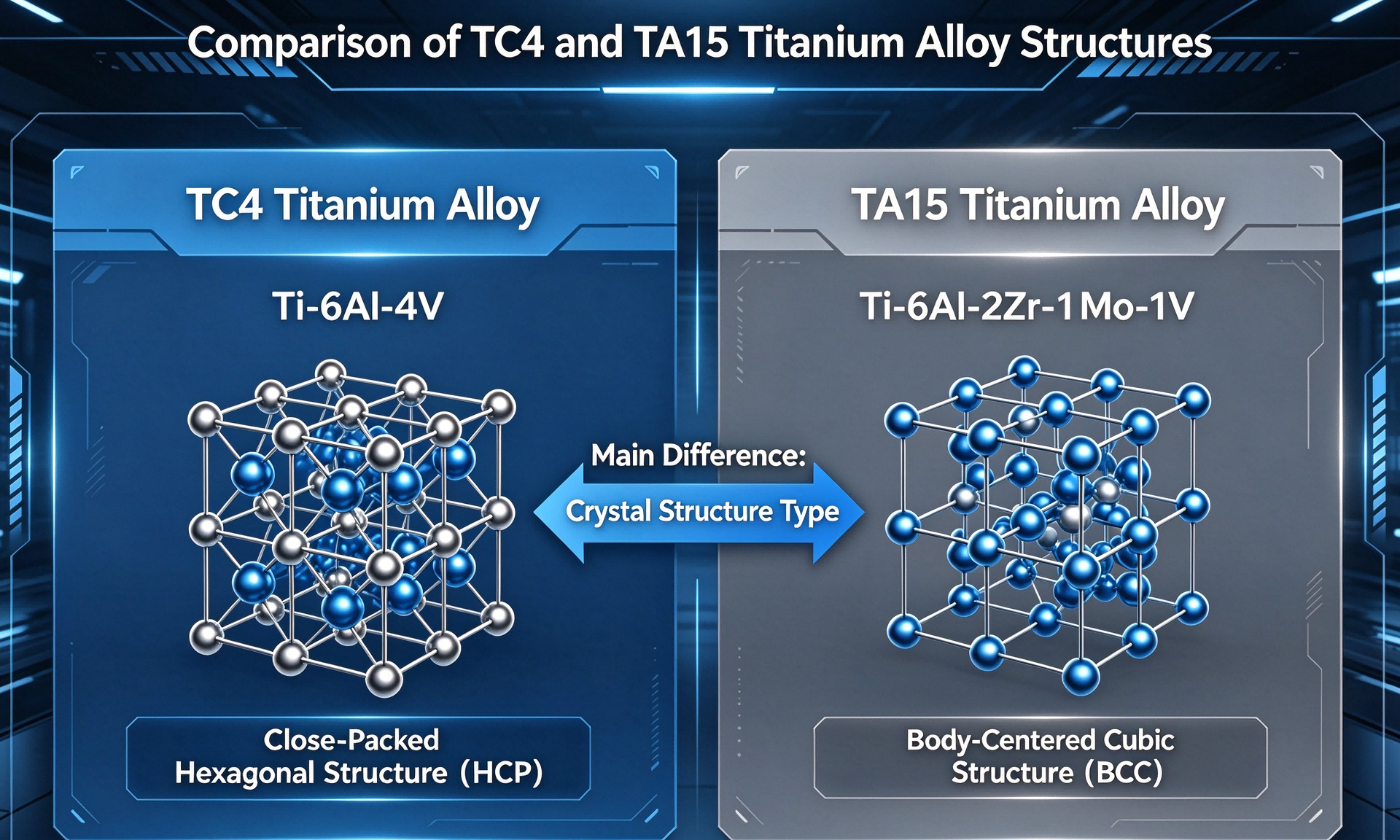
1. Understanding the Two Titanium Alloys
TC4: The All-Rounder
Type: Alpha-beta (α+β) titanium alloy
Composition: Ti-6Al-4V
Key advantages: High strength, good toughness, fatigue performance, corrosion resistance, and mature manufacturing processes.
TC4 is one of the most widely used titanium alloys worldwide. Its balanced mechanical properties and established processing methods make it suitable for a broad range of aerospace, medical, and industrial applications.
TA15: Designed for Elevated-Temperature Applications
Type: Near-alpha (near-α) titanium alloy
Composition: Ti-6.5Al-2Zr-1Mo-1V
Key advantages: Elevated-temperature strength, thermal stability, and good weldability when processed appropriately.
TA15 is particularly attractive for aerospace structures that require reliable mechanical performance at elevated temperatures. Its alloying elements contribute to strengthening and influence its microstructure, thermal stability, and processing characteristics.
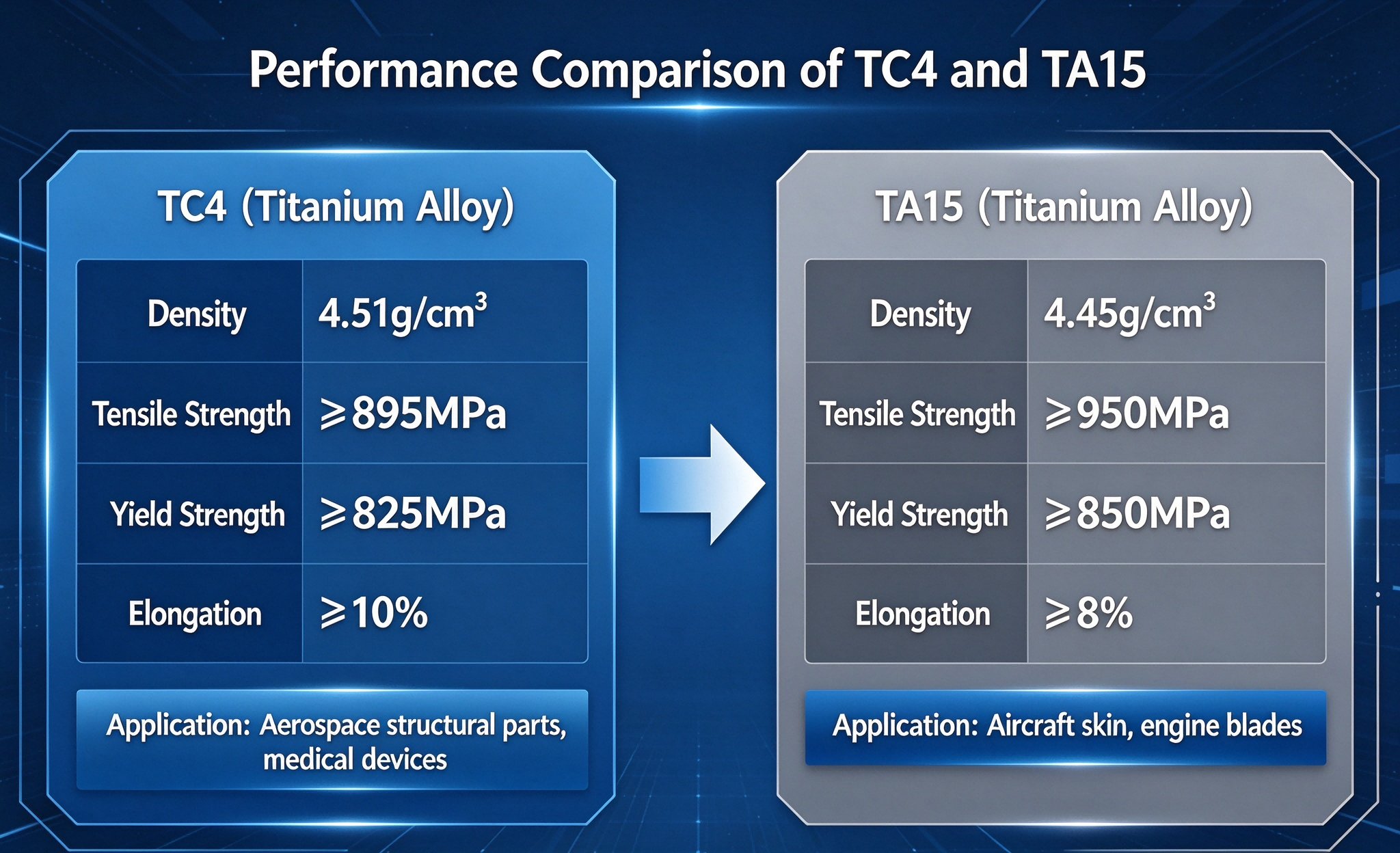
2. TC4 vs. TA15: Key Performance Differences
2.1 Strength and Toughness
TC4: Offers a balanced combination of strength, ductility, toughness, and fatigue performance. Depending on the product form and heat-treatment condition, its tensile strength can reach or exceed 1,000 MPa.
TA15: Provides competitive room-temperature strength and is valued for maintaining suitable mechanical properties at elevated temperatures.
The final selection should consider fatigue life, fracture toughness, applied loads, and the specific material condition.
2.2 High-Temperature Performance
Temperature is a key differentiator between these alloys.
TC4: Commonly used at room temperature and moderate temperatures. Long-term high-temperature suitability depends on stress, exposure duration, and material specifications.
TA15: Designed for elevated-temperature structural applications and may be suitable for service around 400–500°C, depending on operating conditions and qualification requirements.
Actual temperature limits and service life must be verified against applicable material standards and test data.
2.3 Corrosion and Oxidation Resistance
Both alloys benefit from titanium's protective oxide film.
TC4: Offers good corrosion resistance in many marine and industrial environments.
TA15: Also provides corrosion resistance, while elevated-temperature oxidation performance depends on temperature, atmosphere, and exposure duration.
Specific chemical environments should be evaluated before either alloy is selected.
2.4 Machinability and Weldability
TC4: Supports established machining, forming, forging, and welding processes. Appropriate tooling and cutting parameters are essential because titanium alloys generate heat during machining.
TA15: Offers good weldability when suitable procedures and protective measures are used, making it a candidate for selected welded aerospace structures.
Both alloys require appropriate process control and inspection to ensure component quality.
2.5 Additional Advantages
TC4: Widely used in medical implants and devices because of its mechanical properties, corrosion resistance, and biocompatibility, subject to the relevant material and regulatory requirements.
TA15: Particularly attractive for aerospace structures requiring strength and reliable performance at elevated temperatures.
Neither alloy is universally superior; the right choice depends on the component's requirements.
3. Typical Applications
Applications of TC4
Aerospace
Aircraft structural components
Wing and fuselage structures
Fasteners and connecting components
Selected compressor components
Medical
Orthopedic implants
Bone screws and fixation devices
Qualified medical components
Industrial
Corrosion-resistant components
Chemical-processing equipment
High-performance sporting goods
Applications of TA15
Aerospace
Welded load-bearing structures
Selected aircraft structural components
Components operating at elevated temperatures
Industrial
Selected elevated-temperature structural parts
Specialized components for demanding thermal and mechanical environments
The suitability of either alloy depends on the component design, product form, manufacturing process, and applicable qualification standards.
Why Choose Chinamim?
Chinamim focuses on integrating material expertise with precision manufacturing to help customers develop titanium alloy components that meet demanding design and production requirements.
By evaluating component geometry, material selection, manufacturing feasibility, and production volume together, we help customers explore practical solutions for complex precision metal parts.